

Enterprise content management at Duravit: One source of truth for 12 sites
|
Duravit builds bathroom products for customers who want more than the standard fittings, and innovation is central to how it does that. The range includes bathtubs with an integrated sound module, sensor-controlled bathroom lighting, and smart whirlpool and wellness systems.
The company sells in more than 130 countries, but at such impressive scale, it's critical to successfully and seamless collaborate between all of its site locations. With an enterprise content management (ECM) platform, teams get the right information at the right time, whatever system they happen to be working in. That includes ERP systems, CAD tools and everything in between. The same information reaches employees anywhere in the world, which is what makes customer-centric processes possible in the first place.
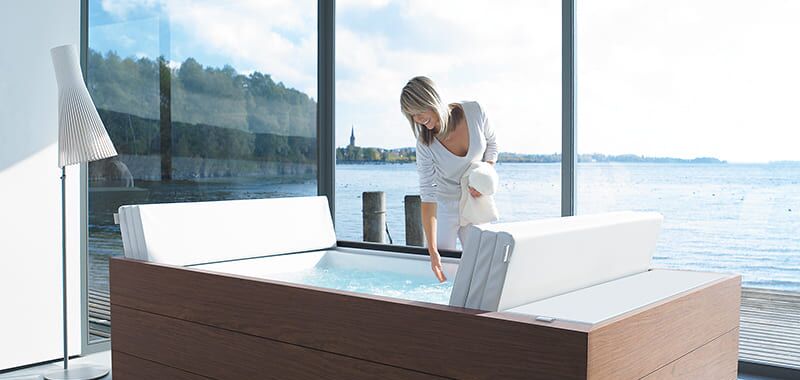
Duravit has been helping customers design their bathrooms for more than 200 years, from classic and functional fittings through to upscale and exclusive ones. The German bathroom manufacturer started life in 1817 as an earthenware factory in the southwest of the country, and today the Duravit group runs 12 production sites across Germany, France, Egypt, China, India, Tunisia, and Turkey.
Every new location and customer project brings more information with it, and the company's document volume now grows by one to two million documents a year. By 2010, the archive handling all of it was more than a decade old and had fallen behind. It was missing functions the business needed, including the detailed cross-tenant authorizations that keep customer data properly controlled, which created a compliance risk. It also struggled to support international business processes, a serious limitation for a company whose 6,400 employees come from around 50 countries and work together across the world. Duravit needed a modern, sustainable replacement: an innovative ECM platform that every part of the business could use.
Information Friction: The Hidden Burden on the Manufacturing Industry
Approvals stall, audits drag and AI pilots go nowhere when plant documents are scattered. See how manufacturers build an AI-ready information foundation.
Get the guideArchive reloaded
Before Duravit could launch the new ECM platform, it was time to say goodbye to the old archive. Around 20 million documents had to be migrated. Werner Hoeltl, Application Manager (Finance) at Duravit AG, explains, “We realized beforehand that it was impossible to transfer several million documents at the snap of a finger.” With the right migration concept, the impossible became possible, without even interrupting operations. Working together with Doxis, all documents were migrated and are now stored in an audit-proof manner.
A 360° view of customers & suppliers
When it came to choosing the right ECM platform, Hoetl says, “It was important for us that we choose a vendor with strong in-house software development capabilities that would fulfill European legal requirements.” Duravit decided that Doxis could fulfill these requirements while also bringing together all information related to customers and suppliers.
The first step was launching customer eFiles. Until then, the different locations communicated by phone, email, or on paper. That meant a slow, manual process and a lot of hunting for documents, especially when a request crossed sales territories. The customer eFile solved it. Departments at home and abroad can now find the information they need wherever they happen to be, including material pulled from Infor, the integrated ERP system, and from the wider company network. Every customer record is available when someone asks for it, so staff can answer questions on the spot.
Duravit also uses Doxis to communicate and collaborate with suppliers around the world. Supplier eFiles document the entire life cycle of a business relationship, so purchasing teams at Duravit's international locations can pull up current orders, order changes, on-call orders, delivery notes, and Infor data in one place. The next improvement is already in the pipeline. Automated inbound mail processing will soon let the ECM platform assign incoming emails and documents from various channels to the right customer or supplier eFile without anyone having to sort them by hand. Employees anywhere in the world will then find correspondence with customers and suppliers already sitting in the right business context.
Up to date anywhere and anytime: eFiles for QM & PM
Since the introduction of the first eFiles, communication between the international locations and Duravit headquarters has streamlined considerably. It’s no wonder then that Duravit wants to expand the ECM platform further, with eFile solutions and workflows for product management (PM) and quality management (QM) already being implemented.
These are the departments responsible for making sure every international Duravit location works from the same assembly and installation instructions. "It shouldn't matter if a sink is produced in Germany, France, or Egypt," explains Hoeltl. "Every location must have unlimited access to the assembly details, such as the space between two holes including the allowed tolerance value."
Rather than keeping those documents on Windows Explorer drives and coordinating changes over long email chains, the quality management and product management teams work on them directly in the ECM system. When a product description changes, the new version is available to every location straight away, which takes production errors caused by outdated information off the table.
Audit-proof archiving of invoices & emails
One advantage of the ECM platform is that it makes information from the different applications available and archives it securely. In 2013, Duravit therefore linked its workflow to electronic inbound invoice processing. The ECM solution digitizes all inbound paper invoices, assigns a barcode to them, and archives them in an audit-proof manner. Duravit’s accounting department can then process the invoices further using Infor. This saves time and prevents errors that can occur if work is carried out manually. The system also documents the entire invoice process in a traceable manner. This also applies to sales tax-related emails. They are stored automatically pursuant to applicable law. During a tax audit, all required documents are available at the push of a button.
EDI archiving: Keeping track of customer requests
Gold-plated handles or faucets? Duravit prides itself on meeting requests like these exactly as the customer describes them. Employees record them as remarks in the electronic data interchange (EDI) order, and If a customer follows up with a question, Duravit plans to use audit-proof archiving to put the answer in the service employee's hands directly.
The article was first published in German in the December 2019/January 2020 issue of the German publication Wissensmanagement Magazin.


How can we help you?
+49 (0) 30 498582-0Your message has reached us!
We appreciate your interest and will get back to you shortly.