

HR is still overwhelmed by paper, putting digital transformation further out of reach
|
HR teams are still being asked to do more with less, while critical work is slowed down by manual documents, scattered information and growing administrative pressure.
In fact, Deloitte reports that HR staff are spending up to 57% of their time on administrative tasks. A 2024 study backs this up, reporting that 22.34% of respondents spend about half a working day a week searching for information; 10.47% spend 1.5 days per week doing the same. This is time HR would rather spend on employees, hiring or more strategic work.
That not only makes digital transformation harder to realize in HR, but also creates immediate problems such as slower hiring, poorer employee experiences, and internal processes that become harder to manage at scale.
Keep reading to explore how your HR team can reduce document chaos and build a stronger foundation for digital transformation.

Digital transformation in HR
Digital transformation has reshaped how businesses operate. Yet in many organizations, HR is still buried in paper files and disconnected systems, spending time on document-heavy work that should have been automated years ago. The cost is real: slower hiring, more friction in employee service, and a transformation agenda that's much harder to scale.
Digital transformation in HR touches every stage of the employee lifecycle, including:
- recruitment,
- onboarding and offboarding,
- employee development,
- contract management & negotiations, and
- managing access to personnel files
But in many organizations, HR typically receives less than 1% of enterprise budgets — the lowest allocation of any business function, which slows the modernization of HR systems.
That approach no longer holds up. HR supports the people behind every business process, and when its systems, documents and workflows aren’t modernized, the effects are felt across the enterprise, as operations depend on a steady flow of new talent and the ability to support employees effectively at scale.
Achieving digital transformation means solving document challenges
In many HR departments, the day starts with a familiar scramble. A hiring manager is waiting for a contract, an employee needs access to their personnel file, and someone is searching through emails and shared drives to find the latest version of a document. Important information exists somewhere — but not always where it should be.
All the while, these HR teams are under pressure from every direction: hiring demands, employee expectations and a growing volume of administrative work. And yet, too much of that work is still slowed down by scattered information and manual document handling.
So, what can HR departments do to work more efficiently and speed up their internal processes?
Streamline HR processes and workflows with a modern DMS
HR needs an easier way to access documents, regardless of the system or device being used, whether that's SAP SuccessFactors, Workday or another HR platform. This is exactly what a modern document management system (DMS) offers.
In simple terms, a DMS allows organizations to store and manage documents and the information inside them so people can find what they need and keep processes moving.
A DMS also provides a stronger foundation for digital transformation by bringing together digital personnel eFiles, a consistent folder structure and built-in capabilities for filing, searching, versioning and managing documents. More advanced DMS solutions also leverage AI and automation to reduce routine manual work, help employees find the information they need faster through self-service and support compliance more consistently with clear audit trails.
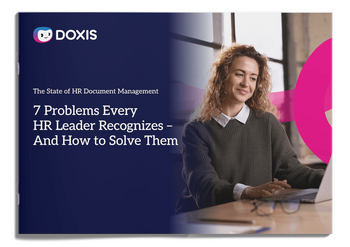
7 Problems Every HR Leader Recognizes – And How to Solve Them
The document challenges HR teams deal with every day do more than slow work down. They also make it harder to build the structured, connected foundation AI needs to deliver real value. Get the guide and learn more
Get the guideA 360° view of employees
One of the biggest draws of a DMS solution is that HR gains a far more connected view of their information, not just a collection of stored files. While you can do this with conventional electronic personnel files, they are limited in their inability to provide a comprehensive view of associated tasks and processes. Instead of switching between disconnected records, tasks and systems, a modern DMS allows HR to work from a single view that supports faster decisions, smoother processes and better day-to-day service.
Real-world challenges solved with a modern DMS
When HR documents and processes are managed in one place, teams can reduce manual effort in day-to-day work. Here are some common HR challenges a modern DMS can help solve:
Manually creating personnel files slows HR down:
When new employee files have to be created by hand, HR loses time and increases the risk of mistakes. A modern DMS can automatically create a personnel file whenever a new employee is added in the ERP system, such as SAP, and keep it up to date when employee master data changes, such as a name or address update. This reduces the need for manual checks and helps prevent errors.
Onboarding and offboarding break down when too many teams work in silos:
When HR has to coordinate onboarding and offboarding across multiple departments, delays and missed steps quickly become a risk. A modern DMS can trigger the right workflows automatically and keep everyone involved aligned on the next steps and deadlines, from setting up keycards and laptops to granting system access and assigning training. Offboarding can be handled with the same level of structure and control.
Incoming HR documents are easy to misfile or lose track of:
When inbound mail and employee documents have to be sorted manually, filing becomes slower and more error-prone. A modern DMS can automatically route all inbound mail and file inbound documents in the correct personnel file. It can also recognize the relevant information without the need for user input and assigns it to the correct place.
Applicant management is hard to track:
When application documents, reviews and decisions are spread across inboxes, systems and different teams, it becomes harder for HR to keep recruitment moving and stay on top of deadlines.
A DMS makes it easier for HR to view new inbound documents and liaise with the correct department by forwarding documents for review and sending automatic deadline reminders. Following a successful hiring process, the application documents are automatically transferred to the newly created personnel eFile.
The documents of unsuccessful applicants are automatically deleted at the end of the application process in accordance with the data protection laws like EU GDPR. This is particularly useful given the stringent guidelines on personal data with prescribed retention periods and deletion deadlines.
Compliance becomes harder to manage as employee records grow:
Manually looking after the data of thousands of employees requires a great deal of effort to keep it protected and stored in an audit-compliant way. It’s easy to overlook something. A modern DMS helps HR by automatically assigning appropriate access restrictions to employee information, complying with statutory retention periods and deletion deadlines, and documenting every step of the way. The result is better protection for sensitive employee information, lower compliance risk and clearer proof that records are being handled correctly.
Accessing HR files should not depend on paper, location or office hours:
With paper files, granting access to managers or employees who want to view an HR file is inconvenient and time-consuming. A modern DMS makes it possible to grant secure access to eFiles from anywhere. HR is automatically informed upon submission of a request to view a personnel file — all the team has to do is approve access for a defined window of time. The employee can see the file quickly and easily on any screen. Not only does this simplify the process for all sides, but the eFile also remains available to HR throughout.
A modern DMS also integrates seamlessly with SAP SuccessFactors
SAP SuccessFactors already supports many HR processes. What it often lacks is centralized document management and a stronger connection between HR documents, data and workflows across the employee lifecycle. A modern document management system integrates with SAP SuccessFactors to link documents with HR master data and processes, making information easier to access within day-to-day HR work.
The system can automatically create digital applicant and personnel files and bring together documents from SAP SuccessFactors and other sources in a structured way. This makes HR information easier to access when and where it’s needed. It can also support compliance through role-based access rights, audit trails and automated notifications for expiring documents and deadlines.
Building a stronger foundation for digital HR
Digital transformation in HR starts with solving the challenges that slow teams down right now. That means connecting documents, data and workflows so information is easier to find, processes are easier to manage and less work depends on manual effort. With that foundation in place, HR can move faster, support employees better and scale its processes with far less friction.
For HR teams already under constant pressure, this is not about adding more to the to-do list. It’s about removing the document chaos from the work they already do every day.
Want to see what that looks like in practice? Explore the steps below.
SAP SuccessFactors meets Doxis



How can we help you?
+49 (0) 30 498582-0Your message has reached us!
We appreciate your interest and will get back to you shortly.